


Why Revolver was the real turning point for the Beatles
Why Revolver was the real turning point for the Beatles

Ian WinwoodWed, August 5, 2026 at 12:01 PM UTC
0
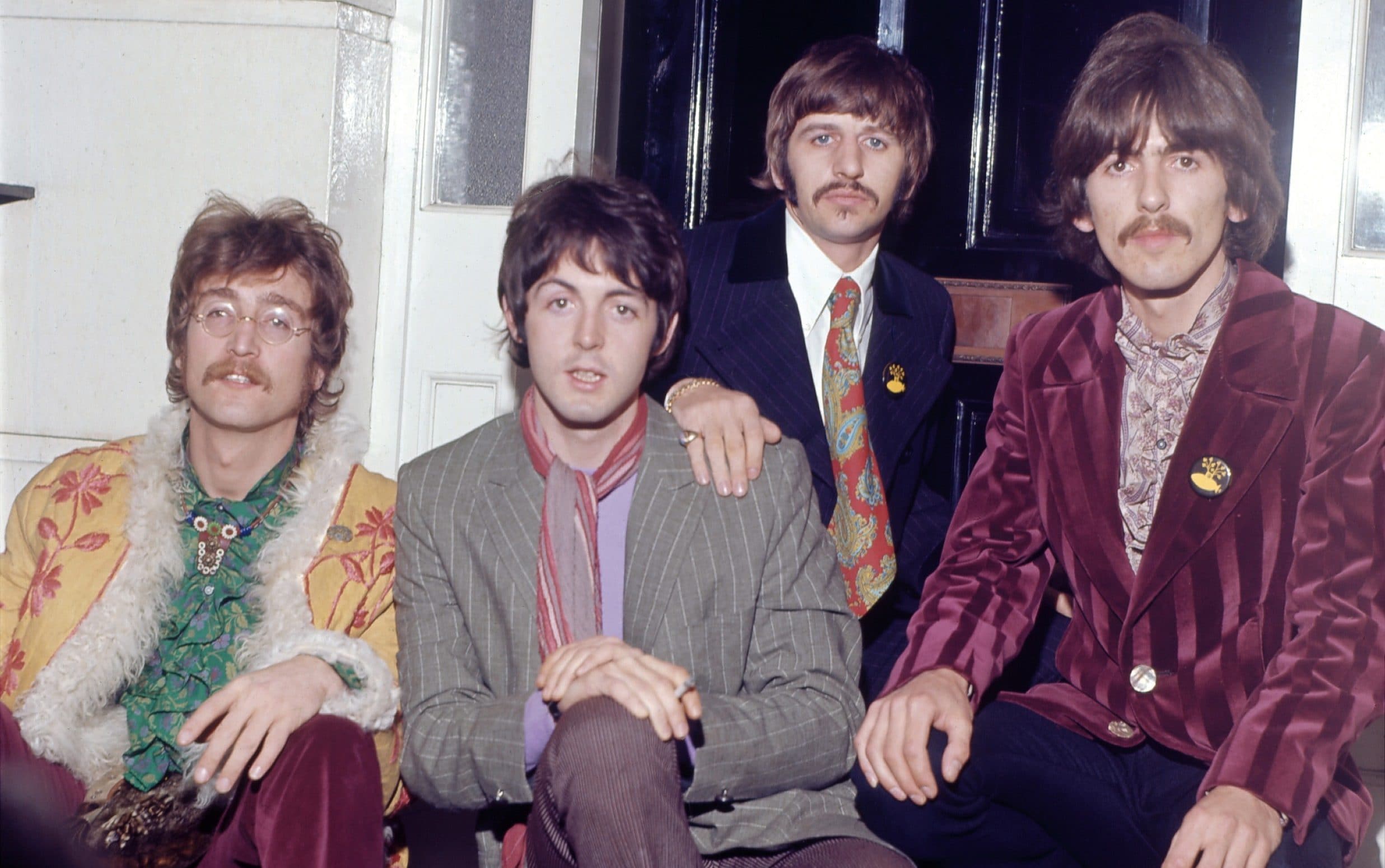
‘You don’t want to be cute anymore’: Bob Dylan’s assessment of the band’s new direction after listening to Revolver - Icon and Image/Jeff Hochberg/Getty
In 1966, after being played an acetate of the then unreleased Beatles track Tomorrow Never Knows, Bob Dylan provided Paul McCartney with what was surely the first known review of the direction the Liverpudlian quartet would take in their career’s second act. “Oh, I get it,” Dylan said. “You don’t want to be cute anymore.”
Later that year, audiences around the world heard Tomorrow Never Knows as the final track on Revolver. This week, on August 5, this most exalted of rock ’n’ roll albums celebrates its 60th birthday.
Today, there exists a spirited camp of Beatlemaniacs who, given the slightest provocation, will make a lengthy and strenuous case that Revolver’s 14 songs constitute the Fab Four’s finest hour. (Or, to be precise, their finest 35 minutes and one second.) At the time of its release, however, the LP was the seventh to bear the Beatles’ name in the space of just three and a half years. 1966 was the first year in which the group released just one, rather than two, LPs. For many contemporaneous listeners, it was difficult to keep up.
As the author Robert Rodriguez notes in his book Revolver: How The Beatles Reimagined Rock ’N’ Roll, at that time: “There was no speculative build-up or public wondering about what the Beatles were about to unleash. Further, its issue came under a cloud: just as the band were preparing to undertake what became their final tour, a scandal prompting bannings and bonfires swept America, dwarfing their stunning achievement.”
A retreat from America
On March 4 1966, John Lennon had told Evening Standard journalist Maureen Cleave that “Christianity will go. It will vanish and shrink. I needn’t argue about that: I’m right and I’ll be proved right. We’re more popular than Jesus now; I don’t know which will go first – rock ’n’ roll or Christianity. Jesus was alright but his disciples were thick and ordinary. It’s them twisting it that ruins it for me.”
In a reaction of which the country can be proud, Lennon’s remarks caused barely a ripple in Britain. Across the Atlantic, the sacrilege of calling out Christ and his acolytes ignited an uproar and the Beatle faced a reckoning when he and the band travelled to the New World for live dates that summer.
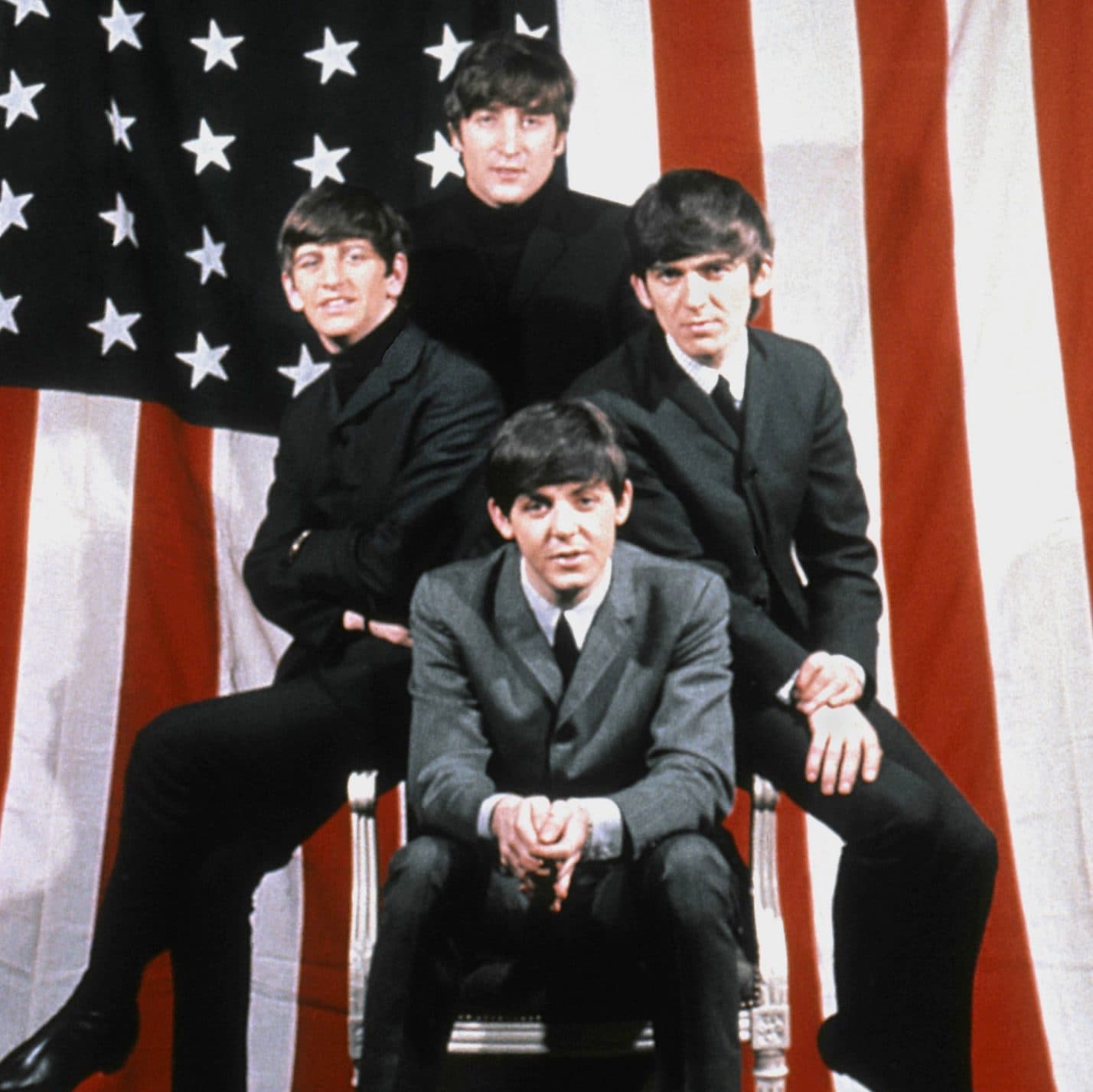
In 1964, the Beatles had spearheaded ‘the British Invasion’ of the USA - Michael Ochs Archives/Getty
The extent to which John Lennon’s colourful comments directly informed the decision to scrap an idea to record Revolver at Stax Studio in Memphis, under the tutelage of in-house producer Jim Stewart, is unclear. (Certainly, costs were also a factor.) Deciding instead to work once more at EMI Studios – now Abbey Road Studios – with George Martin, as they had done with each of their previous records, the Beatles also shelved discussions about making their latest LP at Hitsville USA in Detroit or New York City’s Atlantic Studios.
For reasons that went beyond personal safety, this may have been for the best. Two years after the Beatles spearheaded “the British Invasion” of the USA – followed by the Rolling Stones, the Who, the Animals and more – the country’s call-and-response to the first wave of American rock ’n’ roll had not only put Britain on the map, it had also made it cool.
Broadening horizons in Britain
Dubbed “the style capital of Europe” by Time magazine, London was the place to be for a band who were broadening their horizons at a dizzying rate. As American acts decanted at Heathrow, between February and June of 1966, the Beatles saw concerts by Stevie Wonder, the Mamas & the Papas, Bob Dylan, the Lovin’ Spoonful, Ravi Shankar and more. Elsewhere, after hearing the Beach Boys’ Pet Sounds at a private event, a good-natured arms race of innovation was ignited between Brian Wilson and Paul McCartney.
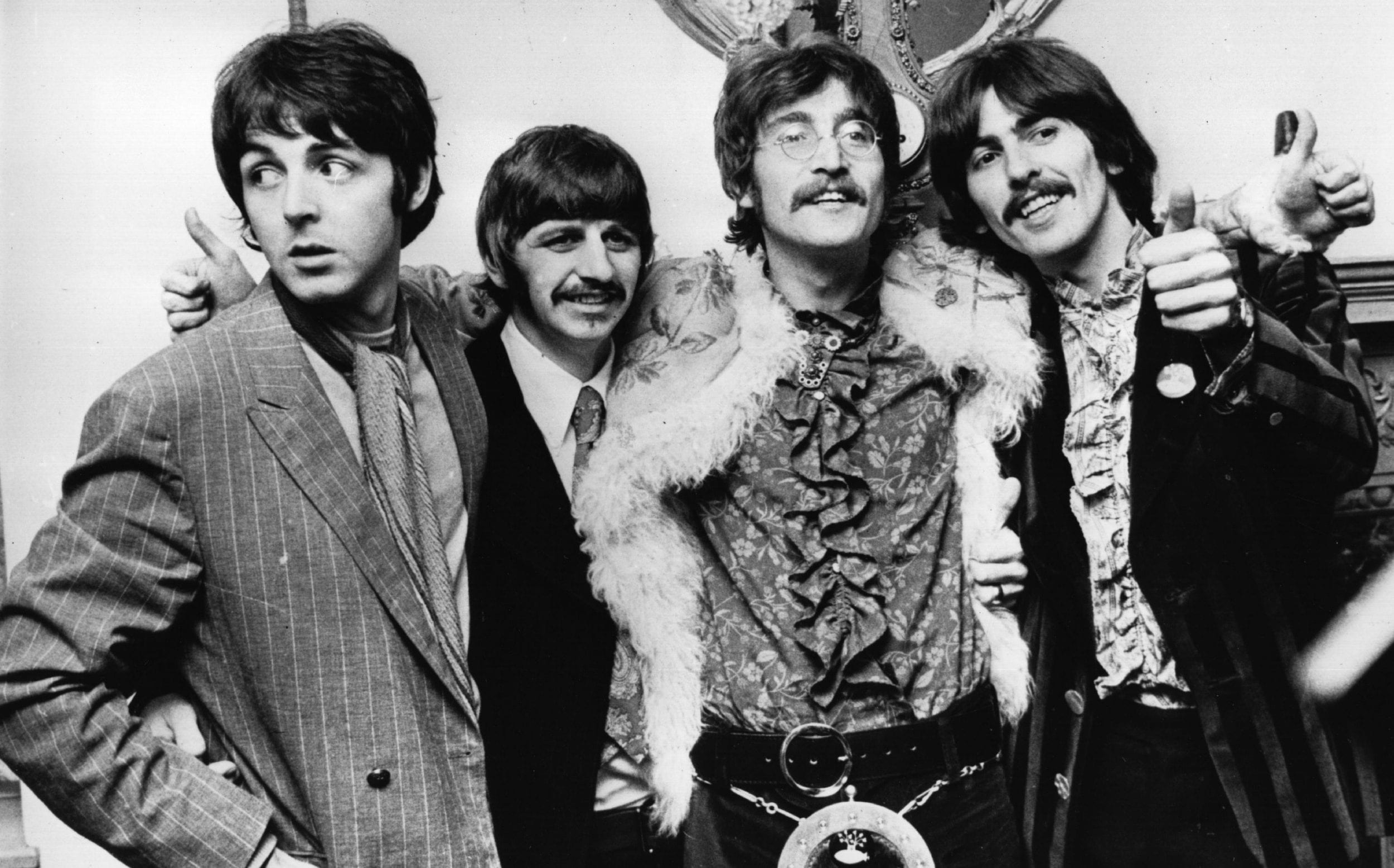
‘The style capital of Europe’: the Beatles pictured in west London in May 1967 - John Pratt/Keystone/Getty
For the first time in their career, at least relatively speaking, the Beatles also had the luxury of time. Freed from the obligations of two albums a year, starring in films, and – I’m not making this up – appearing in pantomime with Cilla Black, the group had time to workshop songs for Revolver to their fullest potential. According to one report, whereas the tracks on its predecessor, Rubber Soul, were thrown together in limited time, by 1966, the quartet had two and a half months to find their groove.
One can hear the extent of their efforts on the Super Deluxe edition of Revolver, from 2022. Out-take versions of Tomorrow Never Knows, Yellow Submarine, Got To Get You Into My Life, Rain, and more, show that as well as writing songs, the genius of the Beatles also encompassed finding the best version of each track amid a forest of apparently boundless ideas.
In the studio, the musicians began stretching their limbs in unusual directions. As Geoff Emerick, the group’s engineer, recalled: “Revolver very rapidly became the album where the Beatles would say, ‘OK, that sounds great, now let’s play it backwards or speeded up or slowed down.’ They tried everything backwards, just to see what things sounded like.”
According to Paul McCartney: “Originally, George Martin was the supreme producer in the sky, and we wouldn’t even dare to ask to go into the control room. But, as things loosened up, we got invited in and George gave us a bit of the control of the tools. He let us have a go.”
A run-in with LSD
It has often been reported that if Rubber Soul was the Beatles’ “marijuana album”, Revolver was fuelled by LSD. But if the group were keen to tune in, turn on and drop out, their first foray into London’s acid scene was the result of a – let us be generous – mischievous intervention.
Advertisement
At the end of a dinner party hosted by dentist-to-the-stars Dr John Riley at his home near Hyde Park, John Lennon and George Harrison, along with their wives Cynthia and Pattie, had their postprandial coffees spiked with sugar lumps laced with acid. Predictably, by the time the quartet clambered into Pattie’s Mini Cooper S for the short drive to the Pickwick Club, near the Charing Cross Road, for the debut British concert of the German artist Klaus Voormann, their evening had taken a turn for the unexpected.
Describing the experience, in her memoir Wonderful Today, Pattie wrote: “All the way over to the club, the car felt smaller and smaller.” Once inside the venue, her normally reserved husband was overwhelmed by “the most incredible feeling… I had an overwhelming desire to go round the club telling everyone how much I loved them – [including] people I’d never seen before”. Alas, the sense of euphoria was far from universal. At the end of the drive home to Esher in Surrey – at 10 miles per hour – Pattie stayed up all night in the company of talking plants and imaginary people who looked like ghouls.
Remarkably, among the Beatles’ many towering achievements, perhaps the least reported is their uncanny ability (when it came to music, at least) to get their drug use just about right. In a balancing act that has tripped up many hundreds of subsequent bands, whether by instinct or design, the quartet seemed to understand that while a controlled number of illicit substances could help open new doors to creativity, overuse would clog the channels and diminish their artistic vision.
With this in mind, the group wrote and recorded music with (give or take) clear heads. As Ringo Starr explained: “It was good to take drugs the day before – then you’d have that creative memory – but you couldn’t function while under the influence. When we did take too many substances, the music was s---. Absolute s---.”
In a similar vein, George Harrison seemed equally aware of the limitations of off-menu items. Addressing his own use of LSD, the guitarist explained that “it can help you go from A to B, but when you get to B, you see C. And you see that to get really high, you have to go it straight. There are special ways of getting high – with yoga, meditation and those things.”
A bridge to the second act
If Revolver contained the most authentic musical replication of the strange rhythms of an acid trip that I’ve ever heard, in the form of Tomorrow Never Knows, elsewhere, much of the music belonged to realms less elevated. Making this the first Beatles LP to open with a composition by George Harrison, Taxman bemoaned the 95 per cent rate of tax levied on high earners such as the Fab Four. Hard on its heels came the eternal Eleanor Rigby, a poignant paean to loneliness that is further distinguished by being the first of the band’s songs not to feature a guitar.
In his beautiful essay Revolver: An Argument For The Best Beatles Album, the critic Reece Maggs described the LP as follows. “Revolver,” he wrote, “is great because it’s a much less dramatic (and far more taut) version of the White Album [from 1968]… It’s got a guitar-slinger anthem (And Your Bird Can Sing), a children’s book singalong (Yellow Submarine), Indian classical music (Love You To), a stoned lullaby (I’m Only Sleeping), Stax-style horns (Got To Get You Into My Life), [and] a brass-instrument counterpoint verse (For No One)… all of which are crammed into 35 minutes.”
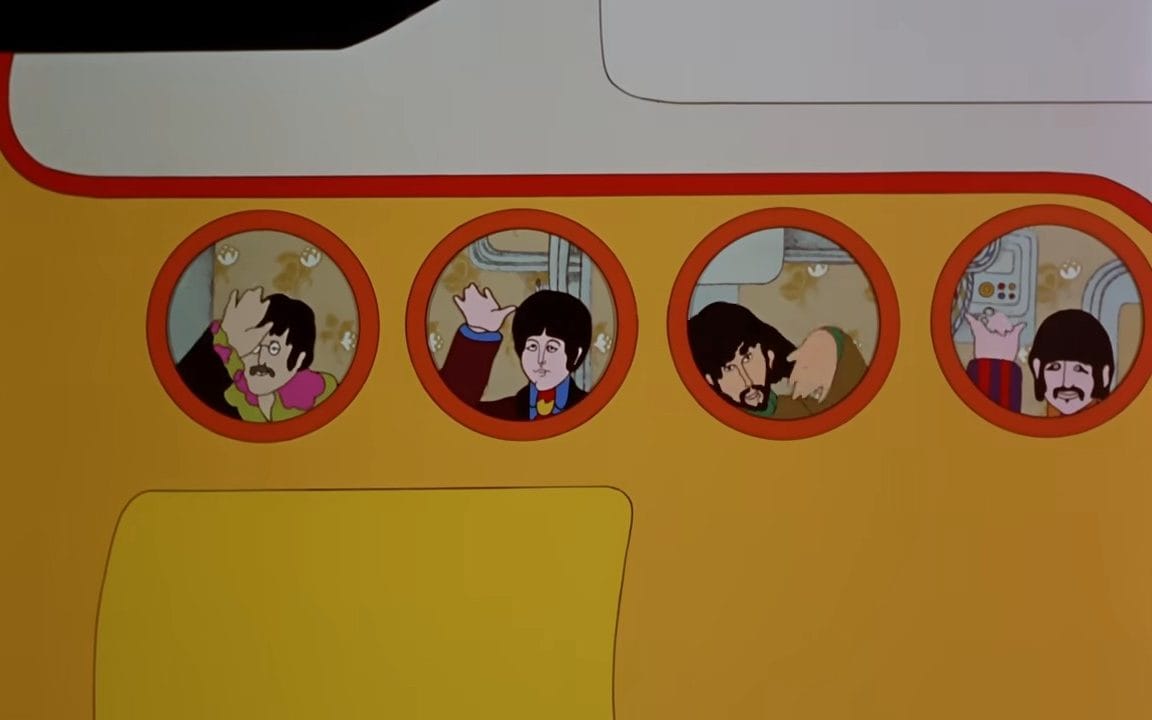
Yellow Submarine inspired an animated film of the same name, which was released in 1968
Revolver’s reputation as the bridge between the first and second acts of the Beatles’ career is attributable to its standing as the last of the band’s albums to have been supported by a concert tour (on which, tellingly, none of its songs were performed live). Having already played what would become their final UK concert in front of a paying audience – at the NME Poll-Winners concert at Wembley’s Empire Pool on May 1 – in August, the group flew west for a series of stadium and arena dates in the United States and Canada.
When rock ’n’ roll grew up
The first order of business was to address those comments about Christianity from six months earlier. Although at first reluctant to apologise for his words, John Lennon was persuaded by Brian Epstein, the group’s manager, that contrition ought to be the order of the day. Shaken by the gravity of his situation, prior to a press conference at the Astor Tower Hotel in Chicago, the guitarist broke down in tears.
“I suppose if I had said television was more popular than Jesus, I would have got away with it,” he went on to tell a large group of domestic and international journalists at a press conference in one of the hotel’s suites: “I’m sorry I opened my mouth. I’m not anti-God, anti-Christ or anti-religion. I was not knocking it. I was not saying we are greater or better.”
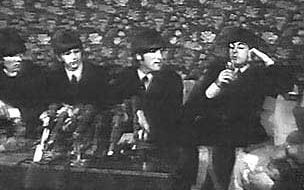
At the 1966 press conference at the Astor Tower Hotel, Chicago
In large sections of America, though, the die was cast. It would be wrong to attribute the Beatles’ decision to retire from the road to the uproar generated by Lennon’s comments. Nonetheless, protests by the Ku Klux Klan, and more, in states north and south contributed to an atmosphere of anarchy and threat that pervaded the campaign. Battered by their experiences, the group’s final concert before a paying audience took place at Candlestick Park in San Francisco on August 29 1966.
From this point on, the group dedicated themselves to the studio. In May 1967, the release of Sgt Pepper’s Lonely Hearts Club Band would become the moment at which rock ’n’ roll is often credited as having been transformed from a singles-based industry beloved of the young, and sometimes the very young, to a more substantive concern in which albums became king. In other words: the movement grew up.
In truth, though, this process was helped on its way by Revolver. Notwithstanding that the four members of the Beatles were no older than 25 at the time of its recording, the album’s extraordinary range and versatility have echoed down the decades. Certainly, in America, its impact, and that of the band who recorded it, is no small part of the reason why music is the only aspect of “the Special Relationship” in which the United States and the United Kingdom converse as equals.
“Unlike our previous LPs, this one is intended to show our versatility rather than a haphazard collection of songs,” was how Paul McCartney summarised Revolver at the time of its release. “This is all part of our idea of being up-to-date and including something for everybody. We don’t intend to go back and revive ideas of 20 years ago.”
Source: “AOL Entertainment”
